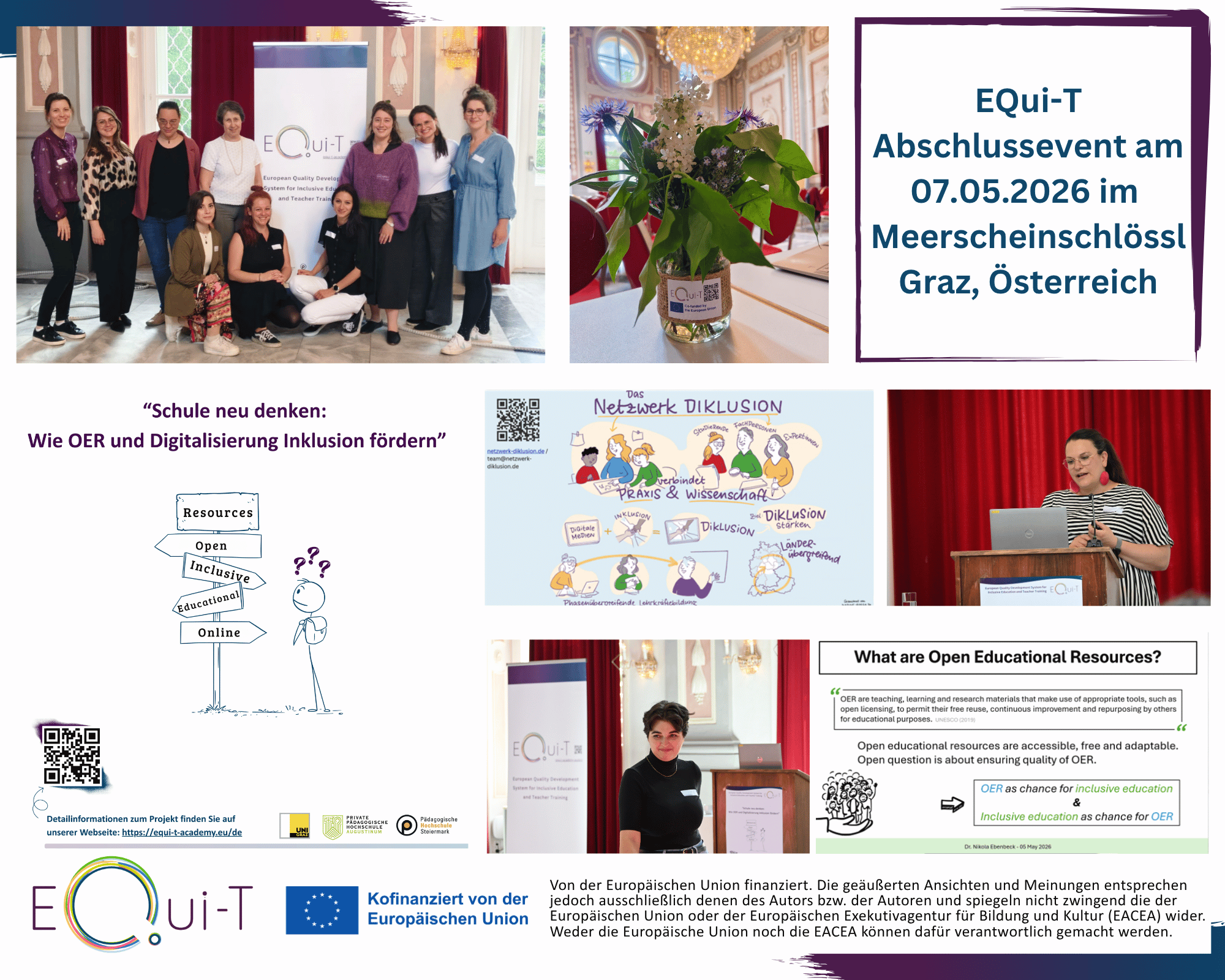
EQui-T Closing Event, 7 May 2026 in Graz, Austria
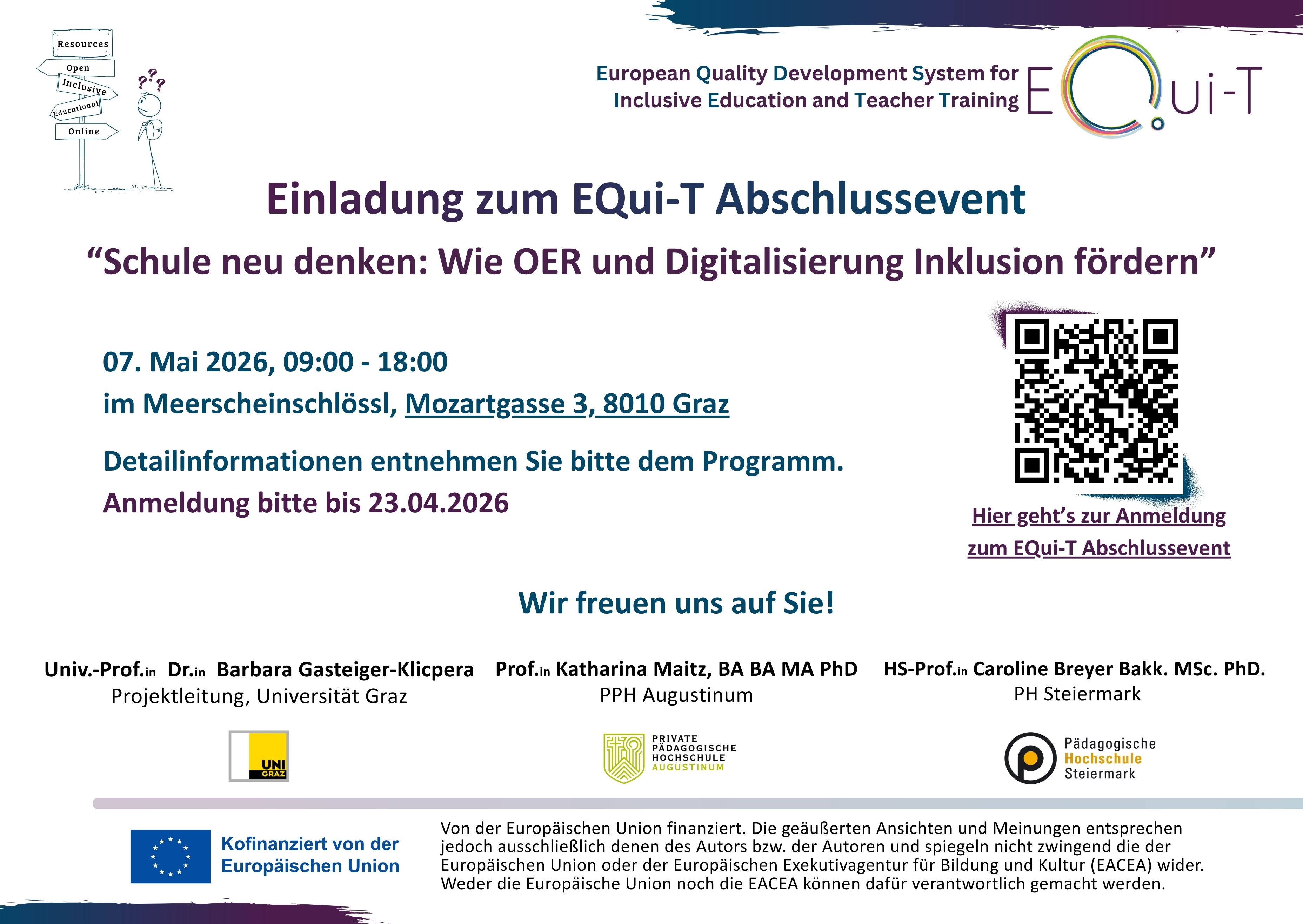
EQui-T is entering its final phase. Under the banner “Rethinking School: How OER and Digitalisation Promote Inclusion”, the Austrian team (University of Graz, PPH Augustinum, PH Steiermark) organised a dissemination event on 7 May 2026 at the Meerscheinschlössl, where participants were treated to a varied programme centred on the themes of Open Educational Resources (OER), inclusion and digitalisation.
Following the opening by Prof. Barbara Gasteiger-Klicpera (Project Leader, University of Graz), Assoc. Prof. Katharina Maitz, PhD (PPH Augustinum) and Assoc. Prof. Caroline Breyer, PhD (PH Steiermark), the first of two keynote speeches took place, which participants from the partner countries were also able to attend via live stream. Following the first keynote by Dr Nikola Ebenbeck on the topic of “Open Education for All: OER as a Tool for Realising the UN CRPD”, participants took part in a coffee walk through a total of five stations presenting the project outcomes, such as the EQui-T criteria catalogue, the Guidelines for Dissemination and the Handbook for Teachers.
Following the opening of the afternoon programme, the second keynote by Dr Lea Schulz addressed the topic of “Digital Media in the Field of Inclusion”, before participants expanded their knowledge of OER and 3D printing (Prof. Heike Marie Krause, M.F.A., PPH Augustinum), on creating inclusive learning videos (Dr Nikola Ebenbeck) and on OER for teaching (Prof. Caroline Breyer, PhD, and Jessica Berger, MSc.) in workshops.
Another highlight of the day was the OER Marketplace, where students presented the differentiated OER they had created themselves.
The EQui-T dissemination event marked a successful conclusion to the project in Austria. The event not only provided a review of the three years of the project and the insights gained, but also looked ahead to the future. During the event, the more than 80 participants interested in inclusion – including teachers, trainee teachers, university lecturers and researchers – had ample opportunity to exchange ideas outside the formal programme, such as during the joint lunch, where they could share their experiences on the topics of inclusion, digitalisation and OER and take away new ideas and suggestions for the further development of educational institutions.
Download the event materials
EQui-T Closing Event, 7 May 2026 in Granada, Spain
“A Loving Gaze…”
“The deepest foundation of inclusive education is what we might call a ‘loving gaze’—recognising each learner as a unique individual and the protagonist of their own life, with their own potential, competencies, and gifts to contribute. In this way, we provide them with the ‘wings’ to better navigate the world.” Inmaculada Garrido
The conference, held at the University of Granada, centred on two main objectives: to pay tribute to all those dedicated to creating spaces for inclusive education and to reflect on new ways of addressing diversity from inclusive and accessible perspectives. The conference also embraced the spirit of a work by one of our speakers: To know, understand, and love inclusion. A kaleidoscope of perceptions, experiences, and proposals."
Eighty-one participants from eight different cities and three countries attended this event. We were joined by 38 researchers from various fields of knowledge (education, computer science, psychology, mathematics, translation and interpreting, business management, and marketing); we were also accompanied by 21 students and six inclusive education professionals, including representatives from the Centro de Educación del Profesorado (CEP) (Teacher Training Centre) of Granada. We are particularly proud of the interest shown by the third sector—that is, the group of associations dedicated to defending the rights of people with disabilities: Granada Down, ONCE (National Association for the Blind), Hermanas Hospitalarias Purísima Concepción, and ALFASAAC (dedicated to literacy for non-verbal individuals)."
Participants embraced the idea of ‘teaching from the learner’s brain’ (Antonio García-Guzmán, Director of the University Master’s Degree in Innovation and Improvement in Attention to Diversity in Ceuta, Spain). The reflections and discussions have reflected the personal and professional commitment of a group of educators dedicated to the task of contributing to a more equitable future—one where everyone can achieve the goals and dreams they set for themselves.
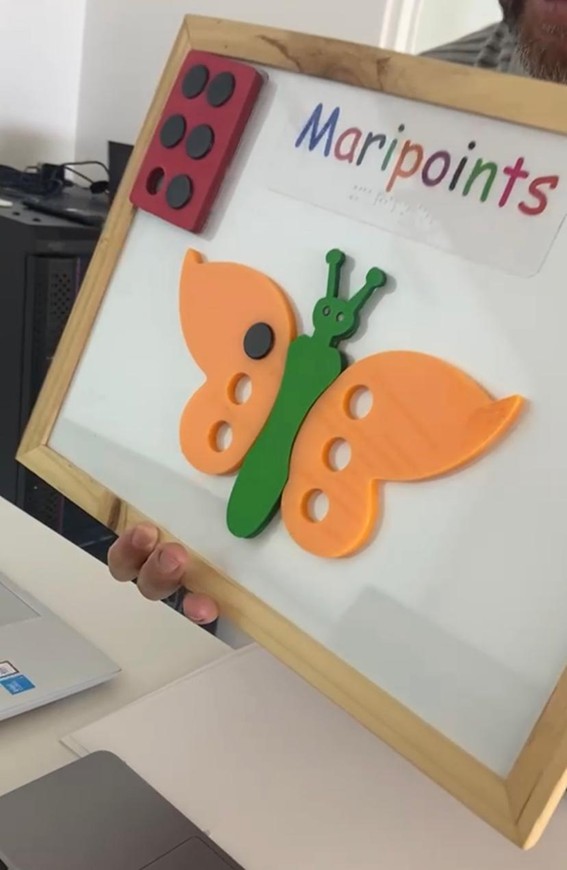
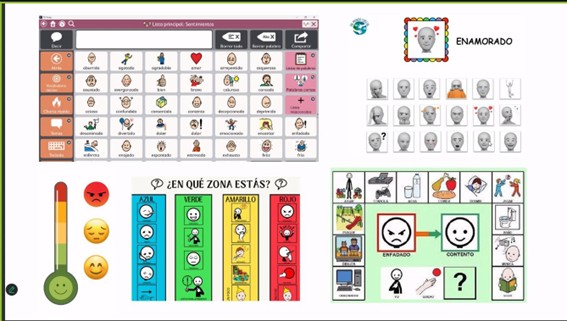
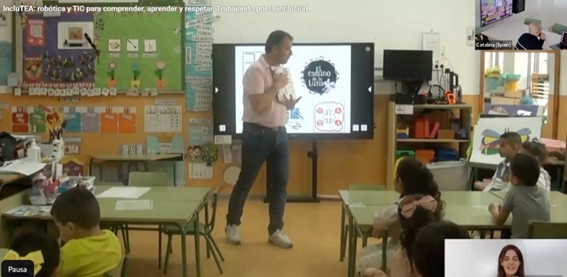
EQui-T Closing Event, 7 May 2026 in Padua, Italy
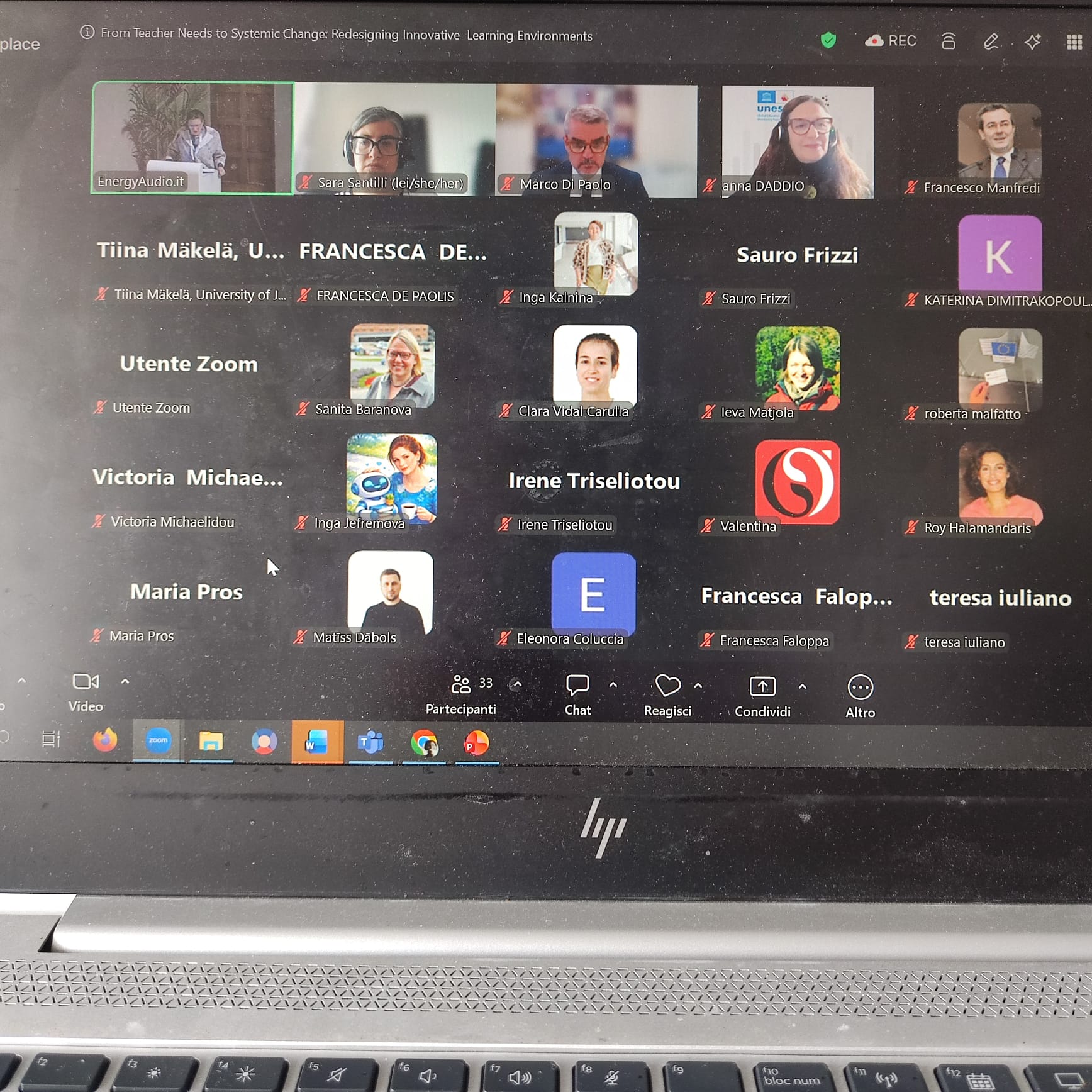
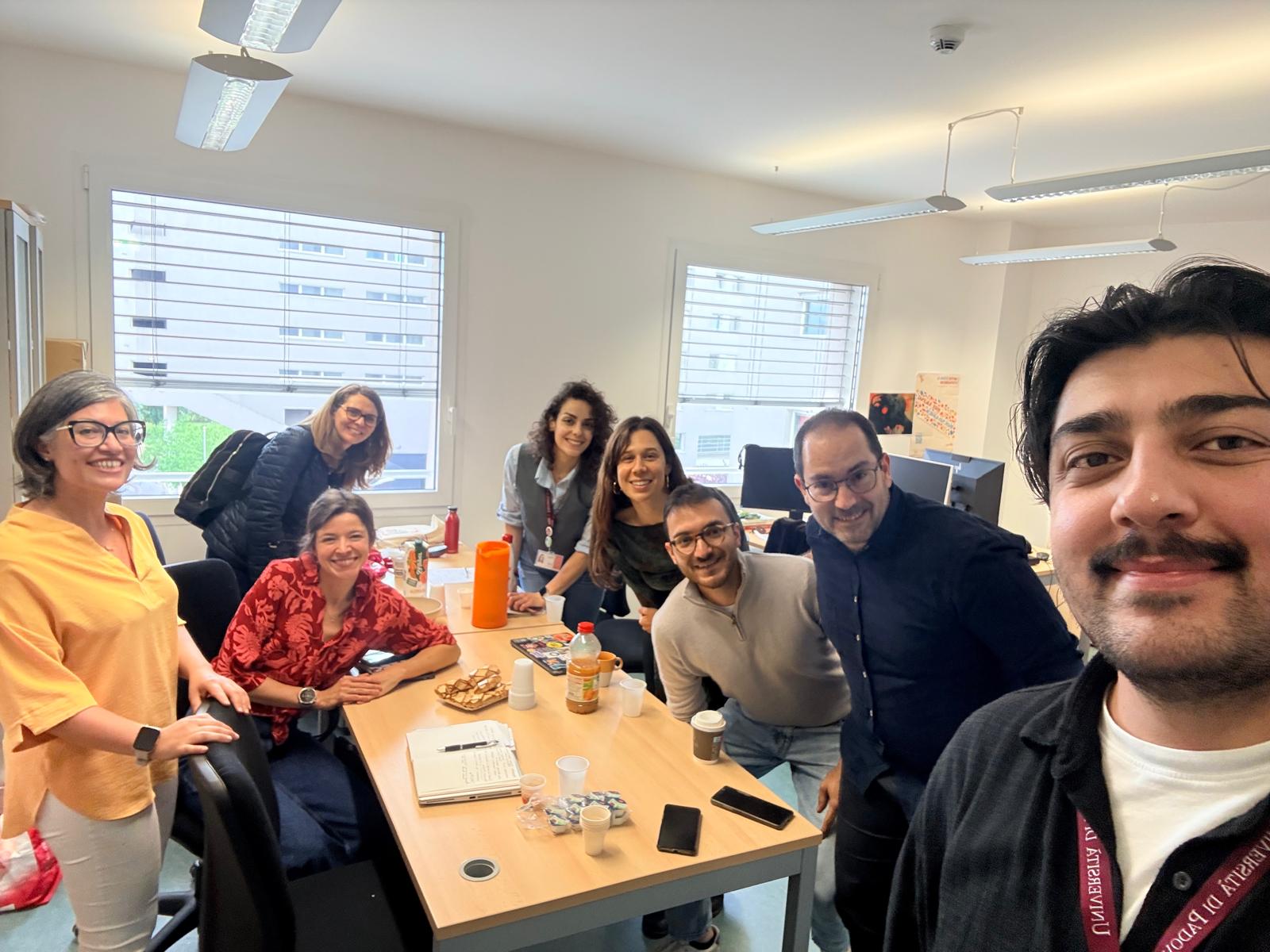
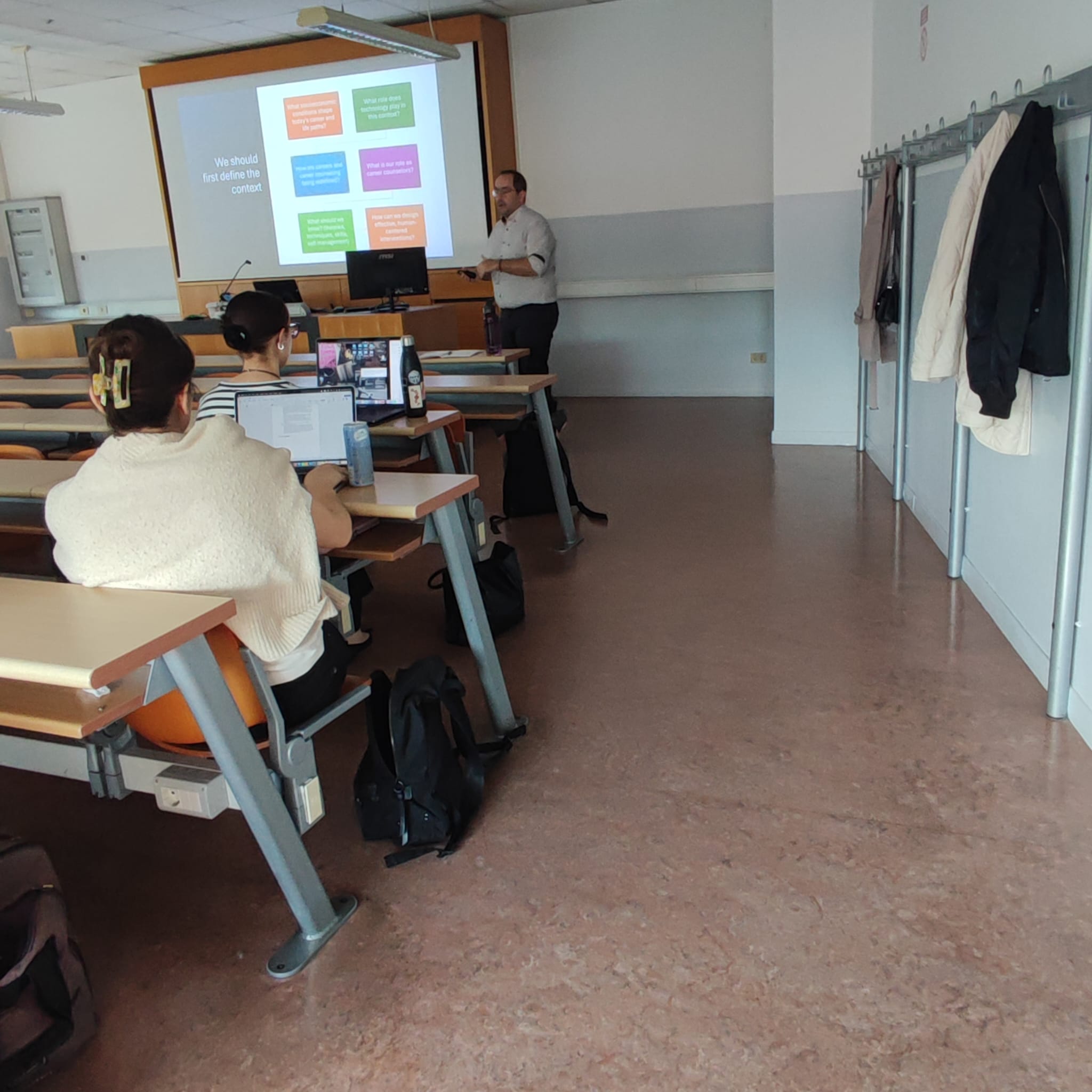
On 6 and 7 May 2026, within the framework of the European EQui-T project, two important initiatives dedicated to inclusion, educational innovation, and the use of technologies in educational and career guidance contexts were held, involving teachers, researchers, and stakeholders engaged at both national and international levels. On 6 May, as part of the annual event organised by the Italian Ministry of Education, INDIRE entitled “From Teacher Needs to Systemic Change: Redesigning Innovative Learning Environments”, Professor Sara Santilli from the University of Padua delivered a presentation entitled “Collaborative Learning Communities and Open Education: Designing Inclusive, Equitable, and Sustainable Learning Environments in Primary Education”, connected to the activities of the European EQui-T project. The presentation explored the role of collaborative educational communities and open educational resources in the development of inclusive, equitable, and sustainable learning environments, highlighting the importance of promoting participation, accessibility, and cooperation in educational pathways from primary school onwards. On 7 May 2026, the final dissemination event of the European project EQui-T – European Quality Development System for Inclusive Education and Teacher Training – took place at the Psico-3 Building of the University of Padua and was dedicated to the theme “OIER: Support for Inclusion”. The event represented an important opportunity for international dialogue on issues related to inclusion, open educational resources, and the relationship between digital technologies, guidance, and individual wellbeing. The day opened with introductory remarks by Professors Sara Santilli and Maria Cristina Ginevra, followed by the online keynote speech delivered by Professor Nikola Ebenbeck (Ludwig-Maximilians-Universität München), which focused on the role of Open Educational Resources in promoting the right to education and supporting the implementation of the United Nations Convention on the Rights of Persons with Disabilities. During the morning session, the outcomes and activities of the EQui-T project were also presented through interactive sessions and discussion opportunities. In the afternoon, Dr Lea Schulz explored the role of digital media in inclusion processes, while Dr Andronikos Kaliris (European University of Cyprus) presented a reflection on the relationship between artificial intelligence, life design, and personal agency. His presentation highlighted how AI can support guidance and career counselling pathways by fostering self-awareness, career exploration, and reflective decision-making, without replacing the central role of the individual in processes of meaning-making and future planning. Both initiatives confirmed the value of interdisciplinary and international dialogue in promoting inclusive, innovative, and socially sustainable educational practices.
EQui-T Closing Event, Tallinn, Estonia
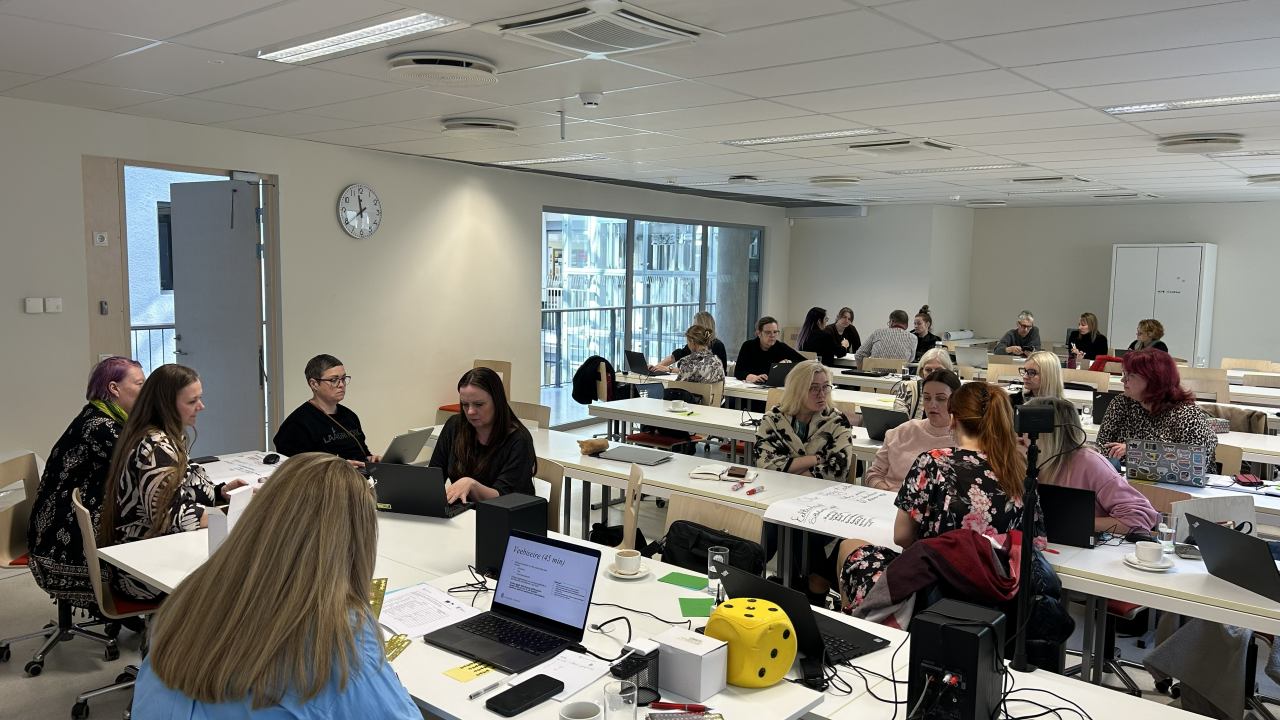
The Estonian national meeting for sharing the Equi-T project results and experiences took place on the 9th of April at Tallinn University The goal was to interact and engage with teachers working across various disciplines and with children of different ages. Additionally, teachers who did not have prior experience or background in inclusive education or Open Educational Resources (OERs) were invited to participate, ensuring a broader exchange of perspectives and ideas.
The day included a combination of presentations and hands-on activities, allowing participants to collaboratively explore and develop OERs tailored to the Estonian educational context. Particular attention was given to the ongoing transition from the previous two-language learning system (Estonian and Russian) towards a fully Estonian-language education system. Discussions focused on the challenges and opportunities this transition brings for both teachers and learners, especially in terms of accessibility, inclusion, and the availability of high-quality learning materials.
Participants had the opportunity to share practical experiences from their own schools and classrooms, reflect on the role of inclusive teaching practices, and exchange ideas on how OERs can support diverse learners during periods of educational change. The interactive activities encouraged collaboration between educators with different levels of experience in inclusion and digital resource creation, fostering peer learning and mutual support.
The meeting also highlighted the importance of creating adaptable and culturally relevant educational materials that can respond to the needs of students from different linguistic and social backgrounds. Teachers expressed strong interest in continuing cooperation and further developing resources that promote equitable access to education for all learners.
EQui-T Closing Event in Oslo, Norway
Our final dissemination event took place on May 12th in Oslo. Around 55 participants attended the event with the title: Inclusive Education - What role may digital literacy and Artificial Intelligence play?
The day was full of insightful talks from four keynote speakers on a variety of themes:
Professor Fazilat Siddiq (University of Oslo and University of South-Eastern Norway), opened the Norwegian final dissemination event in the EQui-T project, and shared the goals of the project, and key results we have achieved throughout the last three years!
Professor emeritus Peder Haug (Volda University College) shared his insights on inclusive education in Norway, its’ history, developments across time and the challenges and opportunities today. Title of his talk: What is inclusive education about in our schools, and what are the challenges and solutions?
To gain more insights into the field of teaching practice, we were lucky to have the three teachers, Cato Hestnes (Finstad School in Ski), Paul Marti (Voldsløkka School in Oslo) and Birgitte Søgaard (Bøleråsen School in Nordre Follo) share their experiences with inclusive education and digital resources. They were also part of our teacher training course, and in this event, they shared their impressive work - showing the teaching and learning materials they have developed.
Associate professor Caroline Cruaud (University of South-Eastern Norway) took us elegantly through the field of playful learning and showed how it relates to inclusive education. Title of her talk: Playful learning and inclusion.
Professor Kari-Anne B. Næss (University of Oslo) shared her insights into research in special needs education. She focused on children’s language acquisition and challenges - when language learning becomes a barrier to learning. Title of her talk: Children's language - a key to inclusion, examples from research and practice.
PhD-candidate Henrik Tjønn (University of Oslo) is involved in a project on AI in teaching and learning in a municipality in Norway. Title of his talk: Teaching about, in and with generative artificial intelligence in the classroom. Tjønn, shared his experiences from pilot to next iteration of use of GenAI in schools, and pinned down lessons learned and future directions. He also posed important questions for future use of AI in education.
Review of the 7th International EQui-T Network Meeting on 20 January 2026
The 7th international EQui-T network meeting focussed on inclusive education in Estonia.
Katariina Karu, teacher and special educator at the Tartu Herbert Masing School (Estonia), provided fascinating insights into the Estonian school system and the implementation of inclusive teaching in her keynote speech “Focus on Tartu Herbert Masing School”. The keynote addressed dealing with heterogeneity in the classroom as well as differentiation and support in everyday Estonian school life. Practical examples also offered plenty of inspiration for the participants' own practical work in inclusive classroom settings.
The keynote's content was further explored in breakout sessions, where conditions for success and challenges were discussed in relation to participants' own teaching practices. The international comparison opened up new perspectives on inclusive school and classroom development.
We would like to thank all participating teachers, scientists and education experts for the inspiring exchange and look forward to the next international online network meeting on 24 March 2026 from 16:00 - 17:30 (CET).
Registration: christina.hasenhuettl(at)er.phst.at


Review of the 6th international EQui-T network meeting on 18 November 2025
At the 6th international network meeting on 18 November 2025, the focus was on digital technologies for students with hearing and visual impairments.
In line with this topic, Prof. Ombretta Gaggi (University of Padua) provided a practice-oriented keynote speech on “Digital Solutions for Inclusive Classrooms”. Participants first engaged in an exercise using images to discuss the challenges of creating accessible descriptions. Building on these insights, the presentation shifted to to school practice, identifying potential barriers for children with hearing and visual impairments. Possible solutions for ensuring barrier-free access for all children were presented, such as digital tools and software, as well as tips for designing accessible documents.
In subsequent breakout sessions, participants explored how the digital support elements presented can also be integrated into their own teaching practice. They also shared ideas on what inclusive teaching with digital tools and programmes might look like.
We would like to thank all participants for the stimulating exchange and look forward to the upcoming international EQui-T network meeting on 20 January 2026 from 16:00-17:30 (CET) .
Registration: christina.hasenhuettl(at)er.phst.at

Review of the 5th international EQui-T network meeting on 24 September 2025
On 24 September 2025, the international EQui-T network met online for the fifth time. This time, the focus was on inclusion and equal opportunities with a special emphasis on children from socio-economically disadvantaged backgrounds.
There was a keynote speech by Monica Melby-Lervåg (University of Oslo) on the topic "Children from low socio-economic backgrounds and in poverty: What can schools do to promote inclusion and opportunities?". The discussions focused on interventions that are particularly effective in everyday school and classroom life to ensure equal educational opportunities for all pupils.
Following the keynote speech, the participants had the opportunity to discuss practical examples in breakout sessions and collaboratively develop strategies to further advance inclusive education.
We would like to thank all participants for their inspiring contributions and look forward to the next network meeting on 18 November 2025 from 16:00 - 17:30 (CET).
Registration: christina.hasenhuettl(at)er.phst.at


4th international EQui-T network meeting on 12 June 2025
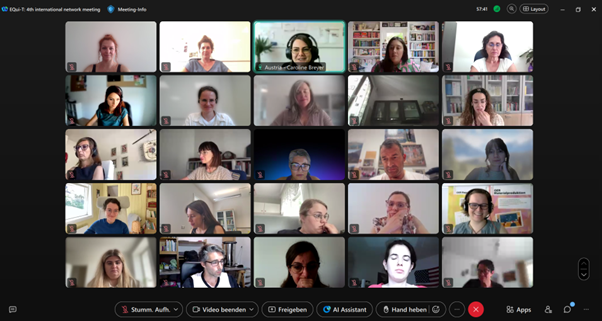
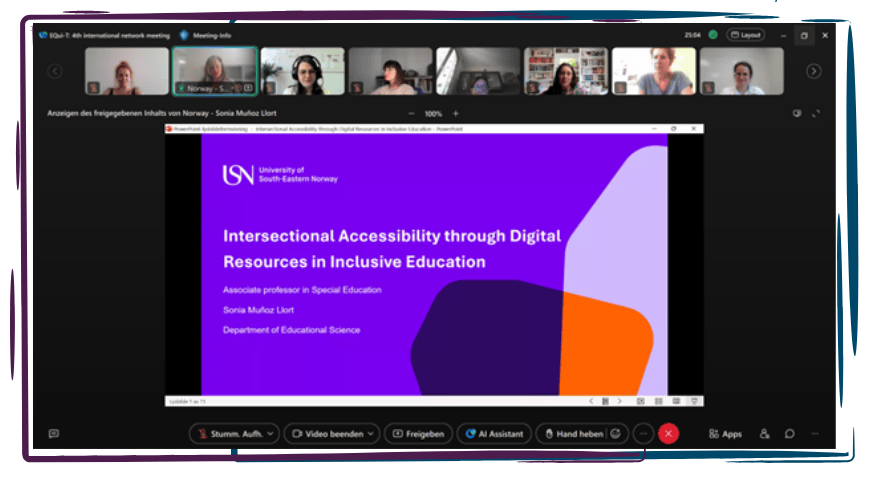
On 12 June 2025, teachers, researchers and education experts came together online at the 4th EQui-T International Network Meeting to discuss access to inclusive learning through digital resources, with a focus on intersectionality.
In a keynote speech by Sonia Muñoz Llort (University of Southeast Norway) on "Intersectional Accessibility through Digital Resources in Inclusive Education", it was demonstrated how digital resources can help to make diversity visible in inclusive education and enable participatory, emancipatory learning from an intersectional perspective.
In subsequent breakout sessions, there were stimulating discussions on how to co-design inclusive learning environments, how students can be actively involved in digital education processes and how digital resources can be used in a way that reflects diversity in the classroom.
We would like to thank all participants for the inspiring contributions!
3rd international EQui-T network meeting
On 6 May 2025, the 3rd international network meeting of the EQui-T project took place, bringing together teachers, researchers and stakeholders from across Europe to discuss the use of artificial intelligence (AI) in the context of inclusive education
After a welcome by Prof. Caroline Breyer, PhD (PHSt), the meeting began with a national exchange on participants’ practical experiences. The discussion focused on AI tools already being used in the classroom, as well as their potential for enabling accessible and personalized education. Uncertainties and challenges in working with AI were also addressed.
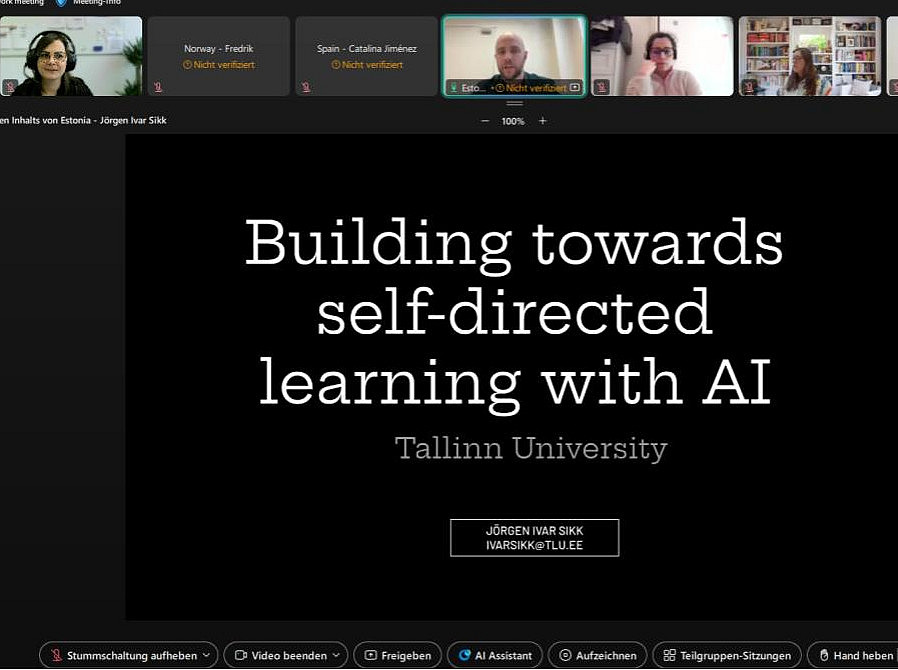
A key highlight was the keynote by Jörgen Ivar Sikk, Junior Researcher at Tallinn University (Estonia). Under the title "Building towards self-directed learning with AI" he provided well-founded insights into current developments and used concrete examples to demonstrate how learning processes can be effectively supported by AI. The following hands-on session was particularly practical: participants had the opportunity to try out various AI-based tools themselves and explore their possible uses in teaching.
Later in the meeting, national networks discussed how the insights gained could be incorporated into their own educational practices—always with a focus on diversity, accessibility, and didactic quality. The concluding summary made it clear: engaging with AI in inclusive teaching is still at an early stage in many places. At the same time, there is a significant need for guidance, exchange, and practical solutions.
The next international network meeting will take place on June 12, 2025, from 16:00-17:30 CEST. If you would like to register, please send an email to Christina Hasenhüttl: christina.hasenhuettl(at)er.phst.at
We look forward to your participation!

On 26 February 2025, we welcomed participants from the fields of schools, inclusion and open educational resources (OER) to the second international online EQui-T network event.
Introductory words by Caroline Breyer (PHSt) were followed by an exciting keynote speech by Miguel Ángel Valero on ‘Best practices for Inclusive OER’.
Barbara Gasteiger-Klicpera (University of Graz), Catalina Jiménez Hurtado (University of Granada) and Carlos Navas-Vallejo (University of Granada) then presented the criteria catalogue for Open Educational Resources developed as part of EQui-T project (WP2).
The various dimensions of the criteria catalogue were then discussed in the national networks (Austria, Italy, Spain, Estonia and Norway). The results of the discussions, suggestions and feedback from the participants in the national networks were then briefly presented by the moderators in the international network.
We would like to thank Miguel Ángel Valero, the speakers from the University of Graz and the University of Granada as well as all participants for the inspiring impulses and the stimulating exchange in the national networks.
We look forward to seeing you again at the next network meeting and hope for equally interesting presentations and discussions on the topics of OER and inclusion.
The 3rd international network meeting will take place on 06.05.2025.
Please send your registration by e-mail to Christina Hasenhüttl: christina.hasenhuettl@er.phst.at
The first EQui-T international networking event took place on 11 December.
The networking event was attended by teachers and other stakeholders in the field of schools, inclusion and Open Educational Resources (OER) from our partner countries.
After a warm welcome by Caroline Breyer (PHSt) and a short introduction by the project lead Barbara Gasteiger-Klicpera (Uni Graz) there were two exciting keynote speeches by Martin Ebner (TU Graz) on 'Open Educational Resources for Learning' and David Wohlhart (Wohlhart Lernsoftware, formerly also PPH Augustinum) on ‘Inclusive teaching - Concepts and Connections with Digital Scaffolding’. Afterwards, the participants took the opportunity to exchange ideas in the national networks (Austria, Italy, Spain, Estonia and Norway).
We would like to thank the speakers for the inspiring presentations and all participants for the stimulating exchange.
We look forward to seeing you again in 2025, where we will continue with equally interesting keynotes and discussions on OER and inclusion.
We look forward to seeing you again in 2025 with equally interesting presentations and discussions on OER and inclusion.
The 2nd international network meeting will take place on 26 February 2025.
Please send your registration by email to Veronika Ruhry: v.ruhry(at)phst.at by 23 February 2025 at the latest.

Review of the 2nd study visit to Padova, Italy
The second EQui-T Study Visit took place on 5 and 6 February 2026. Teachers and stakeholders from the fields of education, inclusion and open educational resources from the partner countries Austria, Italy, Norway, Spain and Estonia met in Padua, Italy (organised by the University of Education Styria and the University of Padua).
After a warm welcome on Thursday morning by the Italian EQui-T team, Prof. Barbara Arfè (Vice-Rector for Inclusion and Disability) and Dr Benedetta Zatti (Director of the Inclusion Service at the University of Padua) presented the university's inclusive initiatives.
On Thursday afternoon, the focus was on the Italian school system: Maria Zallo and Michela Apruzzi (elementary school teachers from Rome) first reported on their everyday teaching lives and their experiences with regard to the inclusion of children with different support needs. Afterwards a “meet and mingle” provided the opportunity for international participants to exchange ideas end experiences.
In the evening, participants enjoyed a concert by the Secondary Music School Orchestra and rounded off the evening with an aperitif prepared by students from the Professional School of Food and Wine (DIEFFE).
On Friday, visits to local schools (primary and secondary) allowed participants to observe inclusive education and the implementation of digital and assistive technologies in practice, demonstrating how Italy fosters equitable access to education.
The study visit not only enabled participants to network professionally and internationally, but also offered ample opportunities to gather ideas for their own teaching practice. The international exchange highlighted the diverse approaches to inclusion and the value of learning from each other.
The study visit thus impressively underlined the importance of cross-border cooperation for the further development of inclusive educational practices.


Review of the 1st study visit to Graz, Austria
On 30 and 31 January 2025, (future) teachers and other stakeholders from the fields of school, inclusion and open educational resources visited Graz. During their study visit, the participants from Estonia, Italy, Norway, Austria and Spain visited two primary schools in Graz. They took part in lessons, observed inclusive teaching practices and talked to school leaders and (inclusion) teachers about ideas and their own practices.
On 30 January, the participants also explored the Digital Lab for Inclusion. In small groups, they familiarised themselves with various digital tools and assistive technologies (including AAC tools) and tried to work with them (e.g. drawing a picture with an eye-tracking tool). They learnt more about the possibilities of using digital tools in inclusive classrooms and shared their personal experiences with different (digital) tools they use in their respective countries, institutions and schools. In addition to some differences in their individual practices, but also the common practices of their respective countries, the participants were also able to find similarities.
On the evening of the first day, the participants also had the opportunity to find common ground away from the practical side of things and get to know each other better over dinner.
In the closing session on 31.01.2025, the participants shared their thoughts, impressions and highlights of the study visit and collected takeaways for their own pedagogical professionalisation. Despite all the differences that the participants recognised with regard to the educational resources in their respective countries, they also identified a number of common ideas and convictions on how inclusive education can succeed in different teaching situations.
In the words of two participants from Spain:
"It was a great experience that we made the most of and, above all, very enriching and useful. [...] The exchange of ideas and experiences with colleagues from the other universities involved in this project was also excellent." (Antonio García Guzmán, Spain)
"Thank you very much for such a fruitful visit, the organisation and the kindness that made two unforgettable and inclusive days in Graz possible." (Miguel Ángel Valero Duboy, Spain)